ARTICLE BLOG

Oplon Secure Access 12.3.0

Performance, Safety, and Operational Speed

Every update to Oplon Secure Access is designed with a specific goal in mind: to make remote access management increasingly efficient, secure, and easy to administer.

Version 12.3.0 continues this journey by introducing features that enhance the day-to-day experience of system administrators and IT professionals. The new features focus on three key areas: Remote Desktop connection quality, privileged password management, and faster response times when working on systems not yet registered on the platform.

Let’s take a closer look at what’s new.

Sharp Mode: A Better Experience During Remote Desktop Sessions

Remote Desktop connections are one of the most widely used tools by system administrators. For this reason, even small improvements in visual quality can result in a significantly more comfortable user experience.

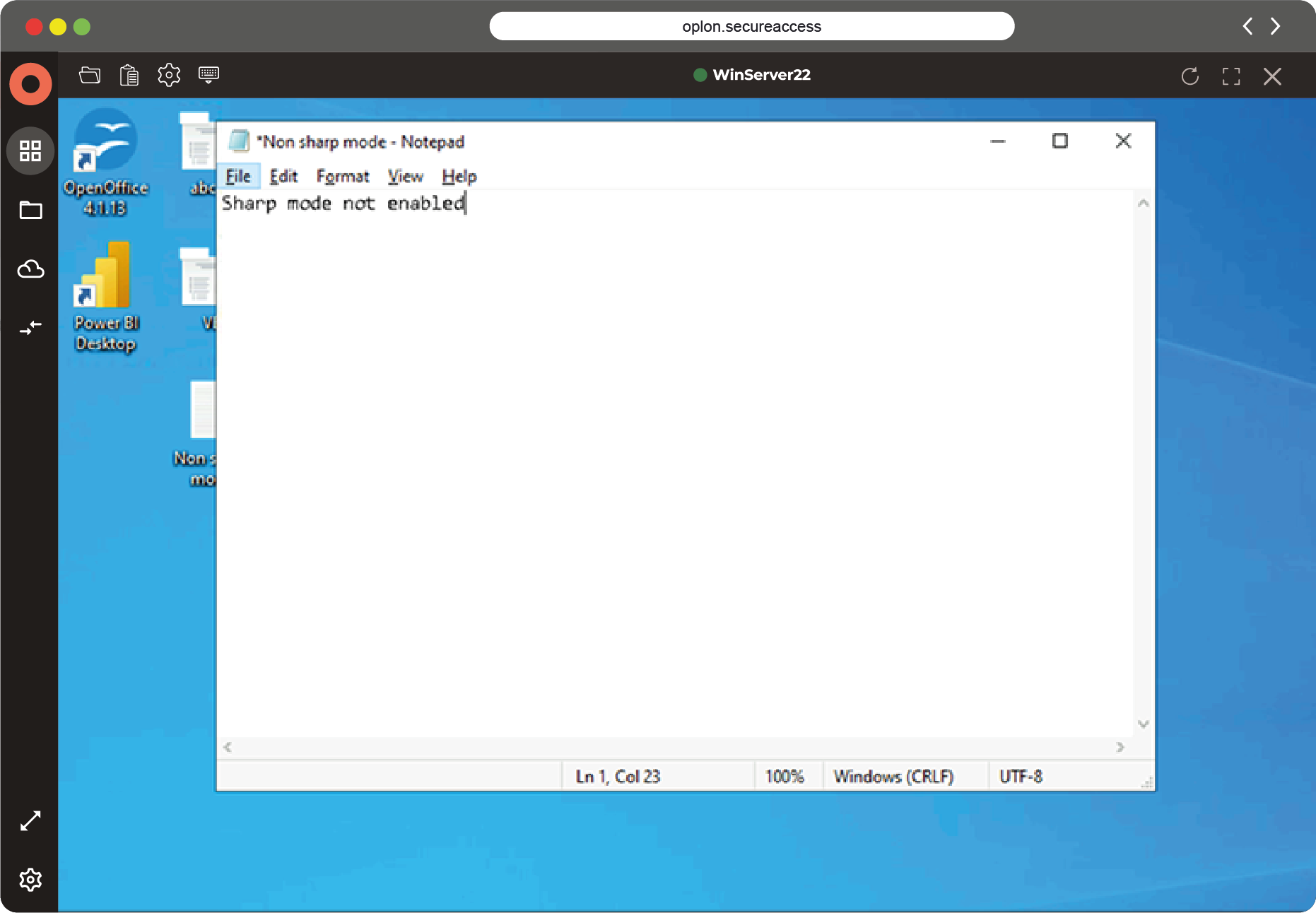
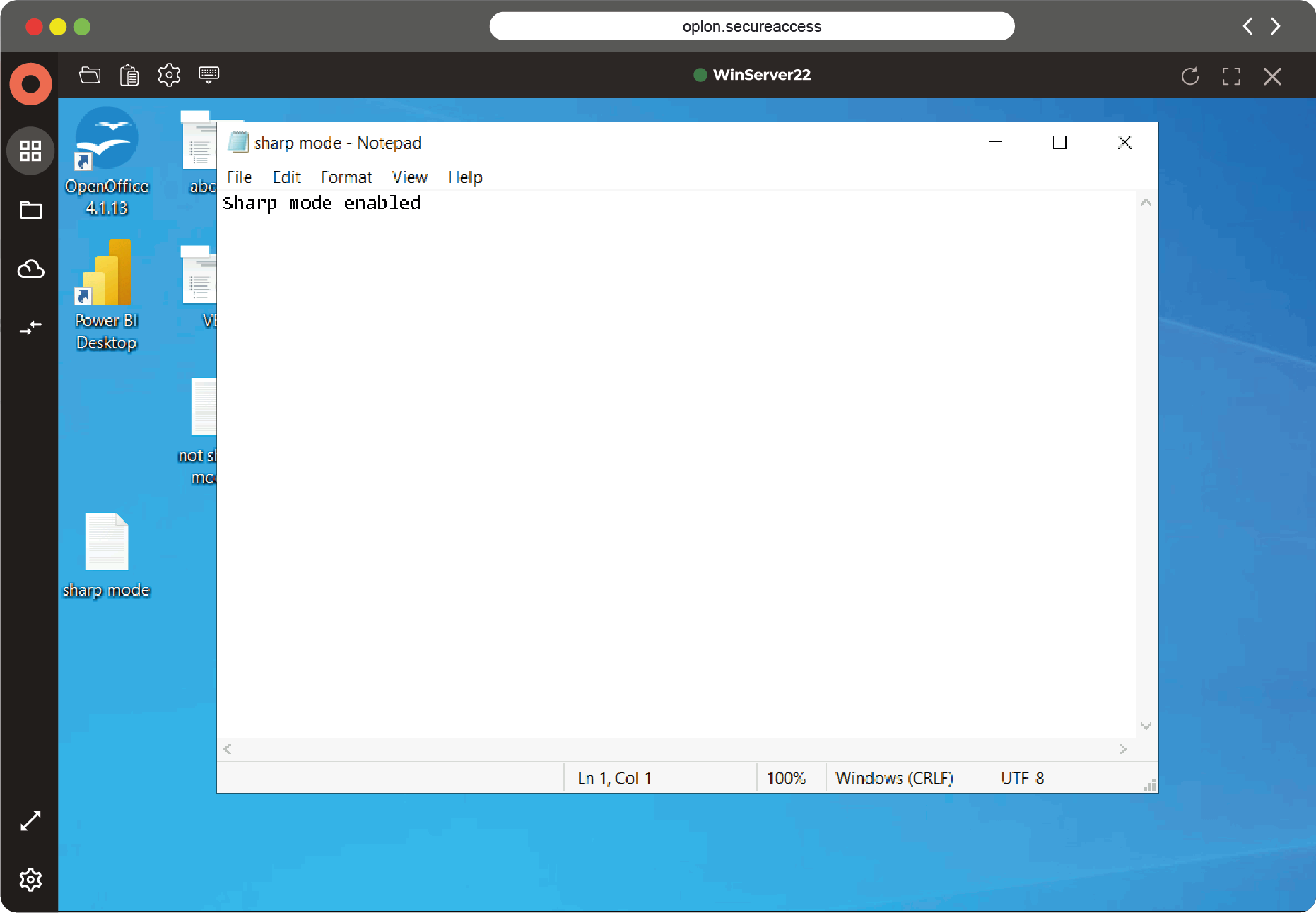
Version 12.3.0 introduces Sharp Mode, a new rendering mode that is automatically enabled and improves the display of RDP sessions.

The benefit is particularly noticeable on modern high-resolution (HiDPI) monitors and on systems using scaling levels higher than 100%, such as 125%, 150%, or 175%. In these scenarios, the remote desktop appears sharper, more stable, and more consistent, improving the readability of text, interfaces, and applications.

The update is completely transparent: once the new version is installed, no additional configuration is required.

Fig. Comparison image with Blend Mode enabled or disabled (Drag the slider to see the change.)
OSA_NewRelease_Sharp_OFF_01OSA_NewRelease_Sharp_ON_01

Password Rotation: More Control for Administrators

Automatic password rotation is a key component for maintaining high security standards in IT environments.

With Oplon Secure Access 12.3.0, this feature has been further enhanced with tools that simplify both configuration and troubleshooting.

The password change process, for both local accounts and Active Directory accounts, has been updated with more detailed error handling and clearer diagnostic messages. This allows administrators to quickly understand the source of any anomalies, reducing the time needed for resolution.

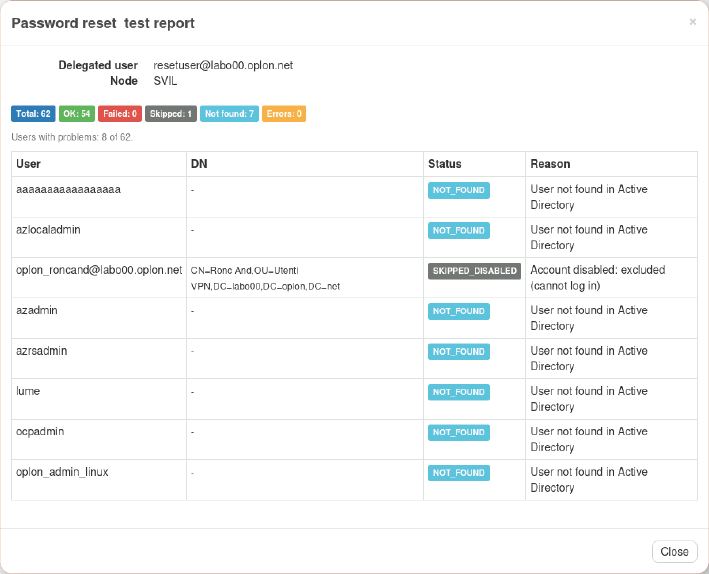
The most significant new feature is the introduction of the Password Rotation Test Runner, designed for Active Directory environments.

Before enabling automatic rotation, it is now possible to verify that the delegated account actually has the necessary permissions and that the configuration is correct. This allows the entire process to be validated in advance, preventing errors during deployment.

Temporary Connections: Take Immediate Action When Needed

Not all operational activities allow you to plan in advance for registering a machine on the platform.

There may be times when you need to act quickly on a new server, a newly installed workstation, or a system that requires urgent assistance.

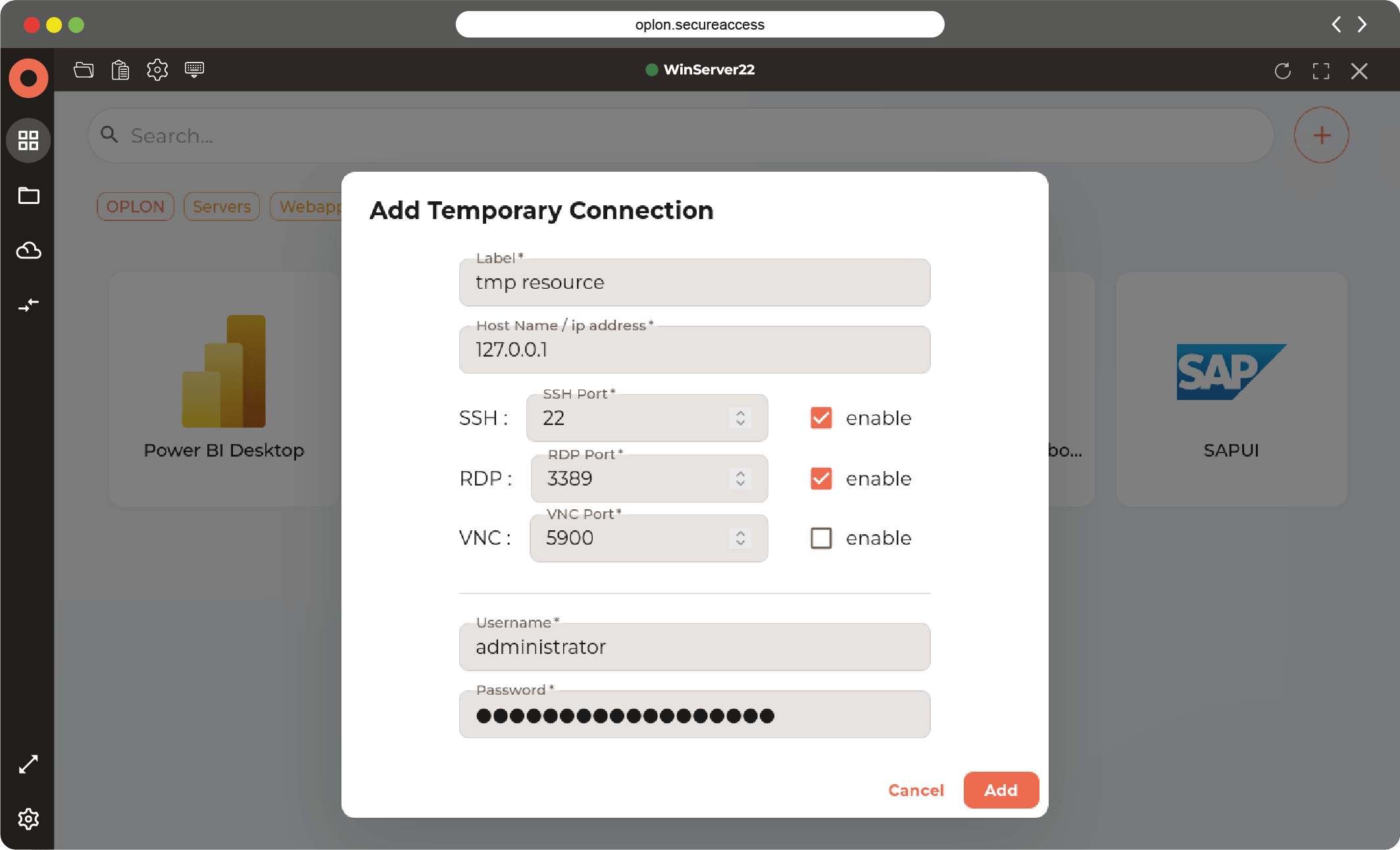
The new Temporary Connections feature was created for these scenarios.

Authorized users can temporarily add a machine and immediately establish a connection via RDP, SSH, or VNC, without having to complete the permanent configuration of the resource.

This approach allows you to respond more quickly to operational needs while maintaining a clear separation between temporary accesses and assets that are permanently managed within Oplon Secure Access.

© Oplon Networks S.r.l. – All rights reserved.​

A release focused on day-to-day operations

Version 12.3.0 doesn’t just introduce new features, it improves the tasks administrators perform every day.

From the quality of Remote Desktop connections to password rotation management and the ability to create temporary connections, every new feature has been designed to reduce operational complexity, increase the platform’s reliability, and make administrative tasks even more efficient.

We would like to thank all our customers and partners for their feedback, suggestions, and ongoing dialogue: their input is essential for guiding our evolution and developing features that effectively address day-to-day operational needs.

With this update, Oplon Secure Access continues its evolution, offering increasingly effective tools for secure and modern privileged access management.

Latest from the blog

The New Paradigm for Accessing IT Resources

Oplon Trusted Connections introduces a new approach to enterprise connectivity: connecting people to resources, not to networks. By integrating modern security with existing infrastructure, it enables secure HTTPS access without exposing the entire network, overcoming the limitations of traditional VPNs. Thanks to an intelligent application layer and the use of isolated containers, it provides granular control, compatibility with legacy systems, and integration with corporate DHCP and DNS. The result is a hybrid model that combines Zero Trust with classic networking, improving security, visibility, and management without disrupting existing operations.

Read More →

Protection of Trade Secrets

The protection of trade secrets, such as know-how and strategies, is governed by EU Directive 2016/943 and the Industrial Property Code. To be protected, they must be secret, have economic value, and be adequately safeguarded through concrete measures. Formal confidentiality is not enough: demonstrable technical and organizational controls (e.g., access controls, encryption, tracking) are required, in line with GDPR and NIS2. Case law requires actual evidence of the security measures adopted: in the absence of such evidence, protection is denied. The focus therefore shifts from the theft of data to the ability to demonstrate the protection implemented.

Read More →

The New Paradigm for Accessing IT Resources

Oplon Trusted Connections introduces a new approach to enterprise connectivity: connecting people to resources, not to networks. By integrating modern security with existing infrastructure, it enables secure HTTPS access without exposing the entire network, overcoming the limitations of traditional VPNs. Thanks to an intelligent application layer and the use of isolated containers, it provides granular control, compatibility with legacy systems, and integration with corporate DHCP and DNS. The result is a hybrid model that combines Zero Trust with classic networking, improving security, visibility, and management without disrupting existing operations.

Read More →