Voucher Cloud & Cybersecurity
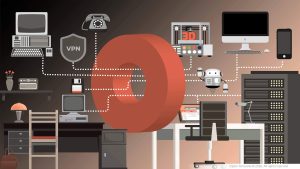
The MIMIT Cloud & Cybersecurity Voucher offers small and medium-sized enterprises (SMEs) and self-employed individuals a concrete opportunity to invest in the security and evolution of their IT infrastructure.

Oplon Secure Access 12.4.0 is out Update →
“Click Days” are not attacks. They are citizens, businesses, and employees seeking to exercise their rights. Yet, for traditional architectures, all it takes is a synchronized wave of legitimate requests to turn a critical service into a scenario of collapse. The problem isn’t the network: it’s the depletion of application resources.
While DDoS attacks remain one of the main threats to the availability of digital services, spikes in synchronized legitimate demand are emerging as one of the most complex challenges for public administrations, banks, and large enterprises. When thousands or millions of users access the same service simultaneously, the risk is not network saturation, but the collapse of application resources. Traditional solutions react to volume; Oplon Secure Access reacts to the system’s actual capacity.
Having been founded and operating in the Italian context amid these critical scenarios, Oplon Networks has addressed and resolved the problem at its root through a specific engineering approach.
The Clusit Report 2026 confirms that the availability of digital services is now one of the most critical aspects of cybersecurity. The growing dependence on online platforms, institutional portals, and digital services exposes both public and private organizations to increasing risks related to interruptions or degradation of operational performance.
Alongside traditional cyberattacks, a less visible but equally relevant challenge is emerging: the management of extraordinary volumes of legitimate requests concentrated within very short time windows. Click days, call for applications openings, incentives, competitive exams, and high-participation services can generate levels of pressure capable of compromising operational continuity even in the absence of malicious traffic.
From a technical standpoint, the effects are often the same: backend resource saturation, increased latency, connection pool exhaustion, database congestion, and potential cascading failures. In a context where resilience, service continuity, and responsiveness have become strategic and regulatory priorities, intelligent management of processing capacity plays a fundamental role in ensuring accessibility, reliability, and service quality.
Recent campaigns attributed to organized groups such as NoName and others represent one of the most striking examples of the evolving threats to the availability of digital services. Unlike actors traditionally focused on data theft or ransomware, the group uses Distributed Denial of Service (DDoS) as a strategic pressure tool, systematically targeting organizations in countries considered politically hostile to Russian interests.
The distinctive feature of this operational model lies in the use of DDoSia, a distributed platform that coordinates thousands of volunteers through Telegram channels, enabling the generation of high-intensity campaigns against targets selected based on the current geopolitical context. In recent months Italy has been repeatedly involved in these operations, with attacks targeting public administrations, airports, financial institutions, transportation operators, media, and essential services.
The most significant aspect, however, is not the technical sophistication of the attack. It is the fact that the success of the operation depends on the ability to push the backend beyond its operational threshold. In other words, the target is not the network: it is the application layer.
And this is precisely where an often-overlooked point comes into play. From an infrastructure standpoint, the backend does not distinguish between a million requests generated by a distributed botnet and a million requests coming from citizens participating in a click day, requesting an incentive, or simultaneously accessing a critical service. In both cases, CPUs, databases, connection pools, and application servers are subjected to the same pressure.
The lesson is clear: the problem is no longer just blocking unwanted traffic, but ensuring that the system continues to operate within sustainable limits even when demand—whether legitimate or malicious—suddenly exceeds available processing capacity.
WAF, static rate limiting, CAPTCHA, and blackhole are designed to counteract bandwidth saturation or malicious patterns. They are not intended for distribution windows for bonuses, funds, or essential services where millions of legitimate users click simultaneously.
The result is immediate:
You don’t need a wall. You need a operational brain that reads the actual state of application systems before traffic reaches the backend.
Resilience is built by decoupling the theoretical input from the actual processing. Oplon Secure Access implements two complementary mechanisms:
The system does not block or ignore traffic, but monitors CPU, RAM, connection pools, and service health in real time. If resources are at capacity, traffic is placed in a queue; when resources become available, the service resumes seamlessly.
Separate the request from its fulfillment both physically and logically:
The backend always operates within its designed capacity, eliminating OOM conditions, lock contention, and cascade failures.
© Oplon Networks S.r.l. – All rights reserved.
The public sector doesn’t just demand uptime. It demands reliable access and compliance with AGID/NIS2 standards. Enterprises aren’t just looking for performance. They’re looking for operational predictability and rock-solid SLAs.
Business continuity requires precise visibility. Here are the critical metrics to monitor
Internal benchmarks confirm the direct impact of the architecture:
With this new implementation, Oplon Secure Access will take a significant step toward security innovation while maintaining simplicity and control across the board, even within existing network security infrastructures.
Peaks in demand are not the enemy. They are a test of resilience. With resource-aware admission control and a dual-queue architecture, Oplon Secure Access transforms unpredictability into order, pressure into continuity, and demand into guaranteed service.
The system does not fight volume. It prevents actual damage by integrating application backpressure, policy-driven fairness, and native observability into a single datapath. In an increasingly demanding regulatory and operational landscape, this approach stands as a fundamental component of the resilience plan, complementary to WAFs, CDNs, and service meshes, but clearly superior in preventing structural collapse.

The MIMIT Cloud & Cybersecurity Voucher offers small and medium-sized enterprises (SMEs) and self-employed individuals a concrete opportunity to invest in the security and evolution of their IT infrastructure.


Oplon Secure Access 12.3.0 introduces enhancements designed to make remote access management even more efficient, secure, and simple. The new release offers improved Remote Desktop session quality thanks to Sharp Mode, more advanced password rotation control with the new Password Rotation Test Runner, and the ability to create Temporary Connections to quickly address issues on systems not yet registered on the platform. This update was made possible in part by valuable feedback from customers and partners, whose input continues to guide the solution’s evolution.

Oplon Trusted Connections introduces a new approach to enterprise connectivity: connecting people to resources, not to networks. By integrating modern security with existing infrastructure, it enables secure HTTPS access without exposing the entire network, overcoming the limitations of traditional VPNs. Thanks to an intelligent application layer and the use of isolated containers, it provides granular control, compatibility with legacy systems, and integration with corporate DHCP and DNS. The result is a hybrid model that combines Zero Trust with classic networking, improving security, visibility, and management without disrupting existing operations.

The MIMIT Cloud & Cybersecurity Voucher offers small and medium-sized enterprises (SMEs) and self-employed individuals a concrete opportunity to invest in the security and evolution of their IT infrastructure.
Oplon Secure Access 12.3.0 introduces enhancements designed to make remote access management even more efficient, secure, and simple. The new release offers improved Remote Desktop session quality thanks to Sharp Mode, more advanced password rotation control with the new Password Rotation Test Runner, and the ability to create Temporary Connections to quickly address issues on systems not yet registered on the platform. This update was made possible in part by valuable feedback from customers and partners, whose input continues to guide the solution’s evolution.