In 2020 and 2021 during the COVID highs, most companies bought many more VPN licenses in order to enable their employees to work from home, and given the fact that hybrid work is here to stay, many of the IT organizations continue to be “saddled” with the burden of maintaining these dangerously vulnerable and costly VPN solutions.
OSA eliminates the need for VPN clients and agents on the back-end services, dramatically cuts down the need for multiple passwords that System Administrators often need to maintain to manage multiple services though a spreadsheet with all the passwords just waiting to be hacked and used against an organization or worst – multiple organizations – as may be the case for an MSP.
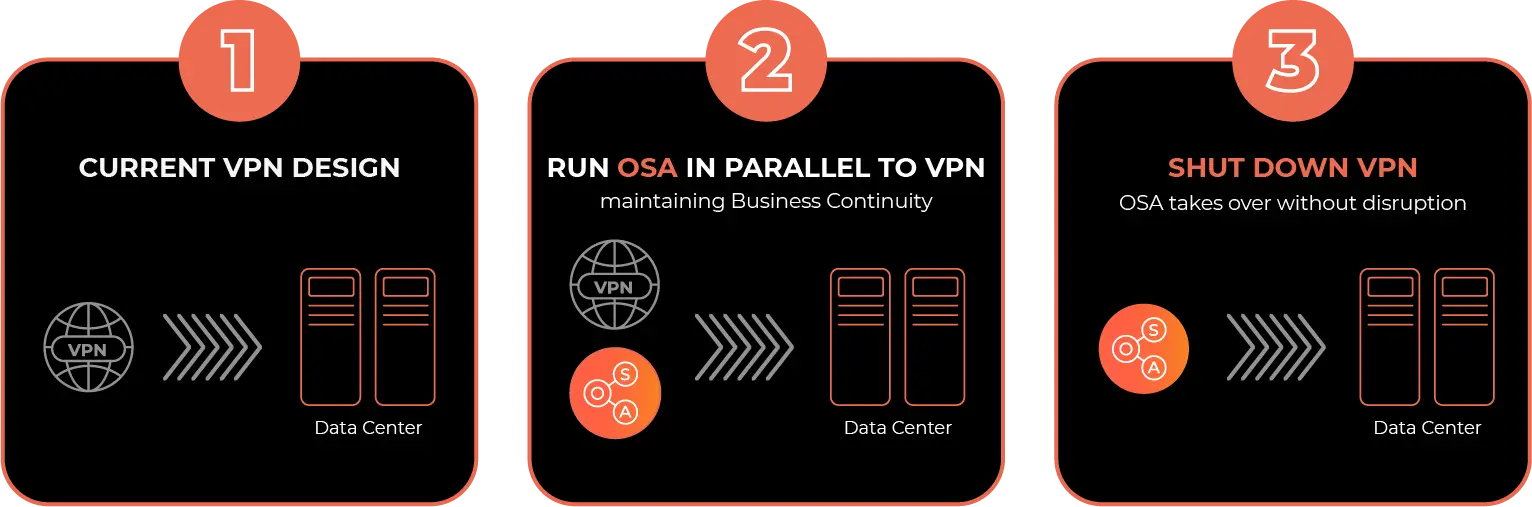
OSA allows IT organizations to migrate the services as quickly or as slowly as needed without business interruption. Organizations can continue to run their VPN, bring up OSA and migrate users or groups of users based on company priorities until they have migrated all users. During the migration process, users will continue to have access to their applications either through the legacy VPN or the new OSA system. When all target users have been migrated to OSA, the VPN systems can be sunset – reducing risk and mitigating costs.
VPNs have been in existence for a long time and frankly will probably never entirely go away – certainly for some purposes and types of organizations. However, with so much at stake for so many organizations handling sensitive corporate data, financial data, personal data and health records, reducing the attack vectors is imperative and if cost reductions can be obtained at the same time, Oplon Secure Access is simply a “no-brainer”.