
Voucher Cloud & Cybersecurity
The MIMIT Cloud & Cybersecurity Voucher offers small and medium-sized enterprises (SMEs) and self-employed individuals a concrete opportunity to invest in the security and evolution of their IT infrastructure.

The MIMIT Cloud & Cybersecurity Voucher offers small and medium-sized enterprises (SMEs) and self-employed individuals a concrete opportunity to invest in the security and evolution of their IT infrastructure.
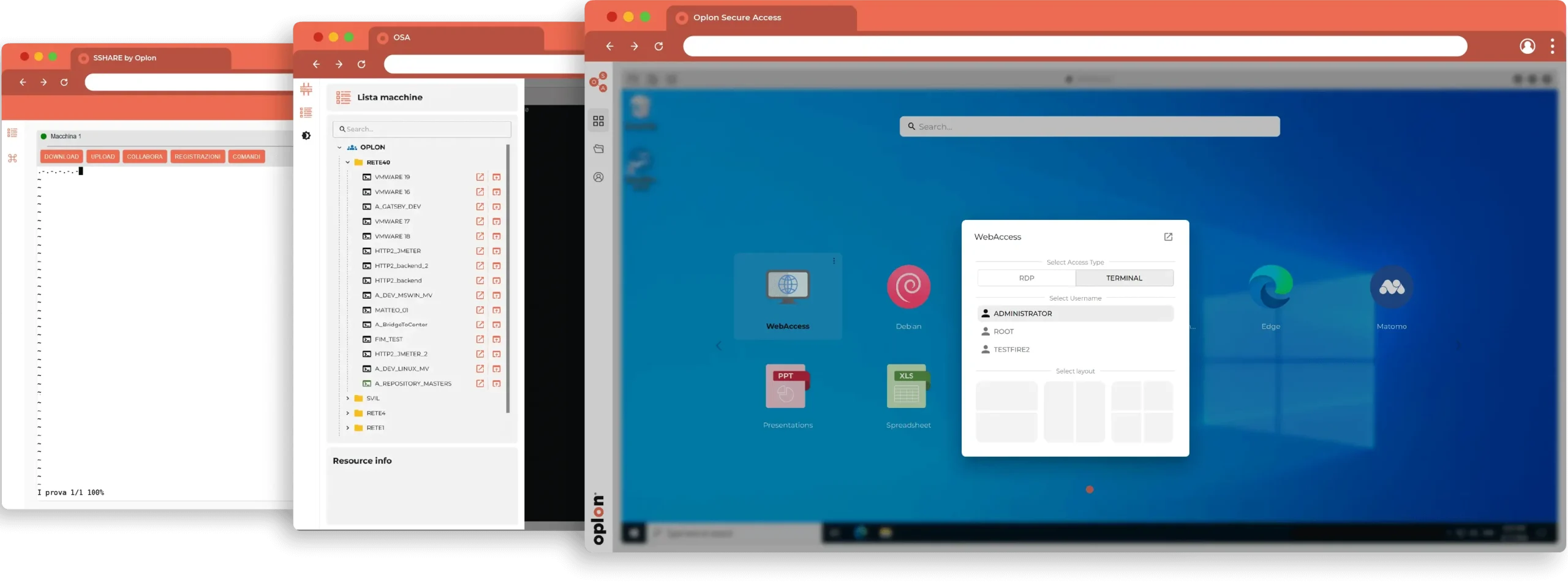
Oplon Secure Access 12.3.0 introduces enhancements designed to make remote access management even more efficient, secure, and simple. The new release offers improved Remote Desktop session quality thanks to Sharp Mode, more advanced password rotation control with the new Password Rotation Test Runner, and the ability to create Temporary Connections to quickly address issues on systems not yet registered on the platform. This update was made possible in part by valuable feedback from customers and partners, whose input continues to guide the solution’s evolution.

Click Days are no longer about attacks, but synchronized legitimate demand that can collapse systems. Traditional WAFs fail: they protect the network, not backend capacity. Resilience requires managing real application capacity under extreme load.
The MIMIT Cloud & Cybersecurity Voucher offers small and medium-sized enterprises (SMEs) and self-employed individuals a concrete opportunity to invest in the security and evolution of their IT infrastructure.
Oplon Secure Access 12.3.0 introduces enhancements designed to make remote access management even more efficient, secure, and simple. The new release offers improved Remote Desktop session quality thanks to Sharp Mode, more advanced password rotation control with the new Password Rotation Test Runner, and the ability to create Temporary Connections to quickly address issues on systems not yet registered on the platform. This update was made possible in part by valuable feedback from customers and partners, whose input continues to guide the solution’s evolution.